




2025 Project Water DROP Results
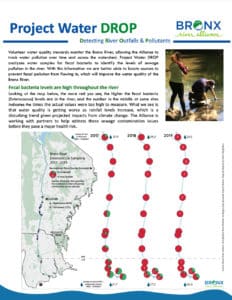
When it rained, it poured and when it was sunny, it was sunny for a prolonged period. This year’s water quality monitoring season yielded interesting results due to these weather conditions. The graphs below show the geometric means of 2025 and its comparison to 2024 and 2023 results. We use geometric mean instead of averages (arithmetic mean) as our data range is broad, due to the nature of bacterial growth, thus isn’t heavily affected by drastic high and low values.
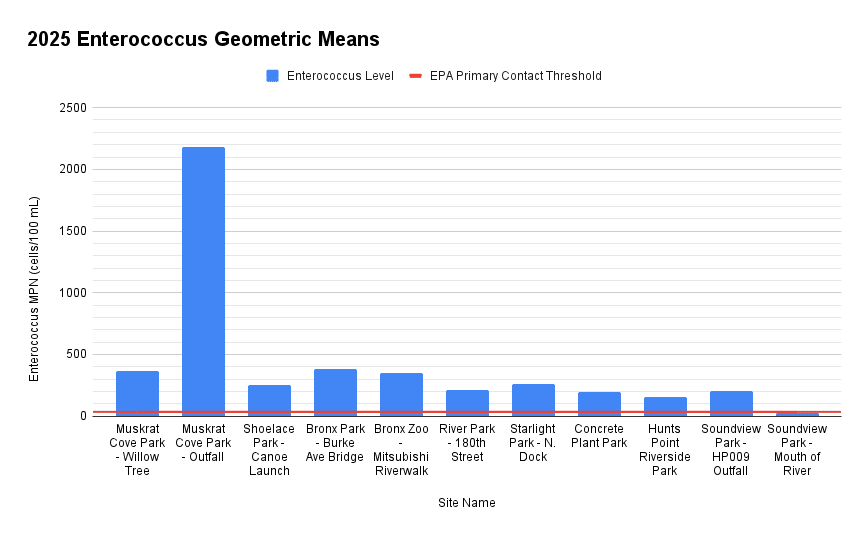
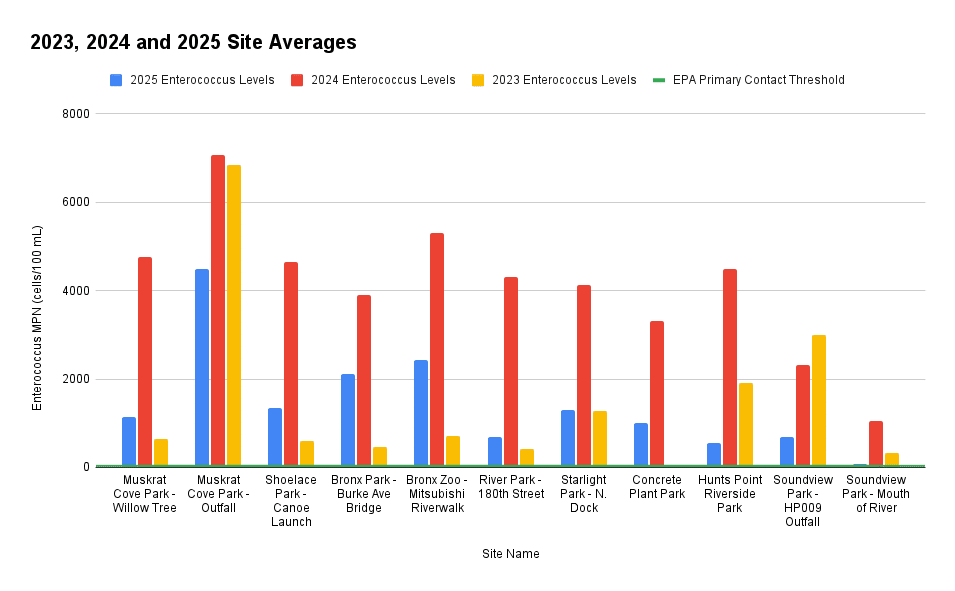
The average Enterococcus bacteria counts throughout the 2025 monitoring season are noticeably lower than previous years, which could indicate a favorable trend. However, due to the frequency of data collection, we recognize that significant weather events can be missed. For example, according to previous rainfall data, 2023 was wetter than 2024 and 2025 however the sampling dates of 2023 mainly fell on drier days. Additionally, both 2025 and 2024’s monitoring seasons were wet early into the seaon then experienced a drought in the latter half, however 2025’s droughts were significantly longer than 2024. These prolonged droughts this season has definitely helped yield lower fecal bacteria results, in addition to the Alliance’s remediation efforts and showcases the possibility of a clean, swimmable and fishable river.
However, while Combined Sewage Outfalls (CSOs) are found throughout the South Bronx, water samples from the lower river have less bacteria on average than samples from the upper river. Despite there being no CSOs along the Bronx River above 180th Street, we continue to see dangerously high levels of fecal indicator bacteria in Westchester and the upper river, especially at Muskrat Cove which yields high fecal bacterial readings regardless of weather conditions. Since this pollution cannot be explained by CSO activity, the sources must be from illegal wastewater hook-ups and discharges to the river, as well as leaks in sewage infrastructure. Focusing our monitoring efforts in Westchester will aid in our understanding of the sources of this contamination as well as what we can do to stop it.